
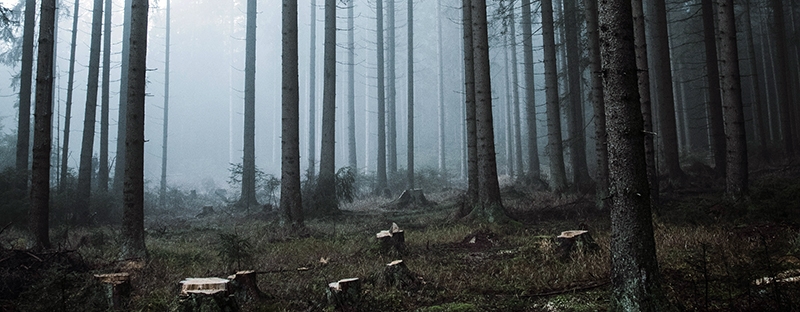
As a kid, I was taught that certain spirits lived just beyond the edges of the path. In Filipino folklore, the nuno sa punso might curse you for disturbing its mound. In Finnish folklore, a type of haltija called a tonttu could guard your house and required certain behaviour. I grew up saying “tabi tabi po, nuno” in the forest to avoid a nuno’s curse, and I often wondered if my house’s tonttu would ever appear to say hi.
To me, belonging is about how we enter a space and how we shape it while there. And as a mixed-race person, I’ve always fallen in the boundary between worlds. Maybe this is why certain stories and “creatures” come back into my life over and over. I want to share some of my favourites here.
Filipino folklore: Nuno sa punso
Perhaps the most prevalent mythological force in my real life is the nuno sa punso. The name translates into English as “old man in the mound” or “ancestor in the anthill.” I mentioned my childhood forest curse-avoidance already, but I learned later that this curse can take the form of bad luck, swelling, pain, or several unpleasant bodily-fluid-related problems. But if a nuno has been properly respected, it can coexist peacefully near people and even help with things like luck and healing.
According to historian Kirby Araullo, in precolonial times the punso represented the sacred tombs of our ancestral spirits, and the nuno living inside became a fearful creature only after Spanish colonization.
The nuno sa punso appears in a scene in my debut novel The Quiet is Loud and is a major character in my novella trilogy in progress.
Finnish folklore: Haltija
In Finnish mythology, a haltija (plural: haltijat) is a protector/guardian spirit living in a liminal space: nature, homes (AKA tonttu), even within ourselves. There are many types of haltija, including saunatontut, the guardians of the all-important sauna; and metsänhaltijat (“forest haltijat”), who can be helpful but can punish people if they don’t respect the forest.
There’s also the “haltija soul” (haltijasielu), also known as luonto, one of three souls each person has. Your luonto can leave temporarily, but a long absence might result in a decrease of quality of life, disease, or even death. At that point, a shaman has to read out a song-spell to strengthen your luonto.
My novella trilogy features a major haltija character, one who I had a lot of fun writing – the many facets of haltija lore turned out to be great for that sort of thing!
Filipino folklore: Tikbalang
The tikbalang is a bipedal shapeshifter, usually preferring the body of a human and the head and feet of a horse. It has disproportionately long limbs, with knees reaching above its head when it squats down. This trickster leads travelers astray and gets them lost on the same path no matter how many times they turn. To prevent this, you keep quiet in the forest or ask permission before entering its domain. Or, if you’re already lost, you can turn your shirt inside out.
Precolonial Tagalog people believed tikbalangs were forest guardians, or guards of elemental kingdoms. According to Araullo, precolonial Kapampángan people thought tigbálang were guardians of mystical treasure, with the head of a bird instead. They weren’t considered evil necessarily, just doing what they should be doing as guardians. Spanish colonization brought the half-horse description.
Along with the nuno sa punso, the tikbalang featured heavily in my childhood and I also included one in a scene in The Quiet is Loud. I love the tikbalang’s duality, the literal hybridity of its being.
Finnish folklore: Ajatar
Ajatar (or ajattara) is a Finnish forest guardian – but where the tikbalang is a trickster type, Ajatar has more malevolent intentions. She lives in the wilds of Pohjola, a mythological place that’s either a northern land, the realm of the dead, or a distant wealthy kingdom, depending on who you ask. Ajatar is a shapeshifter who’s often depicted as half-humanoid/half-snake, a giant lizard, or a dragon. Ajatar is very protective of her domains. She can spread disease or give nightmares to people who fall asleep in the forest. She can also use metsänpeitto – the “forest cover” that turns people invisible and sometimes disoriented – so that they’ll get lost.
“Sometimes you belong because you’re welcomed.
Sometimes you belong because you’ve been changed.“
Boundary keepers & path shifters
To me, these characters from Filipino and Finnish folklore and mythology seemed to fall into two groups: boundary keepers (nuno sa punso and haltija) and path shifters (tikbalang and Ajatar). They watch over borders we can’t see, and shift the places we thought we knew. All four remind us that belonging isn’t fixed – we keep what anchors us, and we adapt when needed.
Which parts of yourself act as boundary keepers? Which parts act as path shifters?
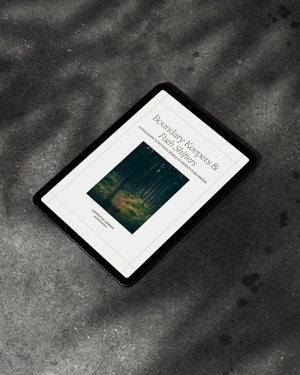
If you’d like to explore these stories in more depth, I’ve created “Boundary Keepers & Path Shifters: a Field Guide to Mythical Beings of Identity & Belonging,” a free PDF for subscribers to my newsletter, Deadmedia. In it you’ll find expanded lore, personal stories, two bonus mythical figures, questions for reflection, and simple rituals for connection with the liminal world. Find out more and subscribe here!
NB: I’ve made every effort to find reliable historical sources for traditions that were often not recorded until much later, if at all. Please keep in mind that I’m not a professional historian, and I’m also limited by English-language sources and the foibles of Google Translate.
Main Sources:
https://www.youtube.com/watch?v=YMblJMX0G40&t=162s
https://discover.hubpages.com/religion-philosophy/Why-the-Nuno-sa-Punso-Deserves-Respect-and-Not-Fear
https://haltijavakea.blogspot.com/2013/10/haltija-or-haltia-elves-in-finnish.html
https://kotus.fi/uusi-suositus-satuolennon-nimitykseksi-kay-haltia-tai-haltija
https://sammenluola.home.blog/2022/04/23/on-souls-vaki-force-and-healing/
https://ancient-finland.blogspot.com/p/magic-and-shamanism.html
https://scandification.com/finnish-mythology-creatures-and-finnish-folklore/
https://yle.fi/a/20-295760
https://books.google.ca/books?id=Wl_TCwAAQBAJ&dq=V%C3%A4ki&pg=PA69&redir_esc=y#v=onepage&q=V%C3%A4ki&f=false
https://en.wikipedia.org/wiki/Baltic_Finnic_paganism#Soul,_death,_and_the_afterlife
https://en.wikipedia.org/wiki/Tikbalang
https://youtu.be/nCNEaHeTm2Y?t=543&si=5kgLPKms33U6QHQH
https://finnish-folklore.fandom.com/wiki/Ajattara
https://finnmyth.wordpress.com/2022/09/09/ajatar-finnish-forest-goddess/