Reading

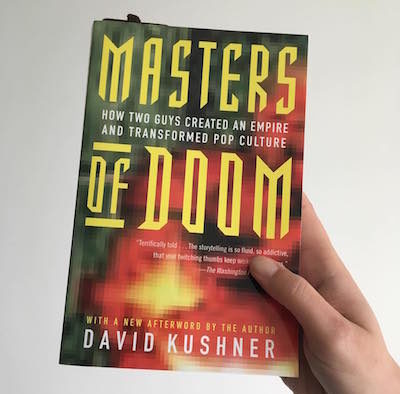
Masters of Doom

The early days of home computers and video games has always been a particular interest of mine. In fact, it’s my stock answer for the “if you had a time machine” question – while I would love to visit all sorts of historical periods, I’d probably fare a bit better in the early ’80s as a very liberal, non-religious, mixed-race woman than I would in the Tudor era, for example! Masters of Doom isn’t a […]
Masters of Doom Read More »

victorian visiting

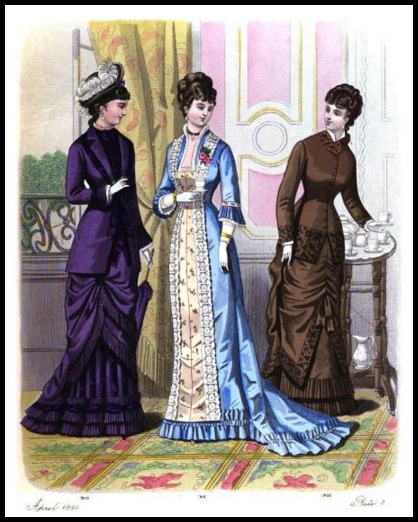
Etiquette of morning calls and visits of ceremony

One of the reasons I love reading Victorian/Regency novels is that I get a glimpse of the everyday rituals, strange to us now, that were so important to the people performing them. One of those rituals that always seemed at once charming and terrifying to me was the obligation of the morning call 0r social visit. So much seemed to hinge on those visits! For example, from Jane Austen’s Persuasion: “Where shall we go?” said [Mary], when

Etiquette of morning calls and visits of ceremony Read More »

Food in writing

As I wrote about last year when I read Ethan Frome, descriptions of meals in books are one of the things that really catch my attention when I’m reading. I like to imagine how all the elements of the meal work together. I read this description recently in Margaret Drabble’s The Ice Age: Sadie brought her a tray full of chicken soup and chopped liver and cold chicken and cold salmon and salad and fruit and

Food in writing Read More »

Connected to history

Memorial plaques for three of the family members of Plum Johnson, author of the memoir They Left us Everything (check it out at amazon.ca or amazon.com), which I mentioned in a recent entry. I would hesitate to call this “history,” but seeing these plaques (I had forgotten they were there, so they took me by surprise) brought up the same feelings that visiting actual historical sites or artifacts gives me. That sense that you can be so

Connected to history Read More »

The Outward Room

I wondered how it was that I had never heard of this book and its extraordinarily promising young author. I asked around, but no one seemed to know or remember Millen Brand, or his books. It’s somewhat frightening to learn that good books – even books heralded in their time – can disappear so quickly and completely. [. . .] All of Brand’s work is modest and sincere, two qualities that are undervalued, if not

The Outward Room Read More »

Tripping over the carpet

Days that feel like older days. Lazy suburban summer drives, windows open, listening to a short story read on the radio. Sitting by the lake for an interminable length of time. Browsing at the bookstore I used to spend so much time in, tripping over the carpet. While my mother looks at religion books, I turn around and consider the wicca books, the angel books, remember my teenage bedroom full of ornate candlesticks I imagined would fit in

Tripping over the carpet Read More »

Pretty much why I love “everyday” history.

“Well now, history is not just the tale of the victors,” he said, “It’s the tale of the privileged. The men in the mud of the battlefield didn’t leave much of a story behind, and the stories they did tell were mostly ignored or forgotten.” – A Desperate Fortune, Susanna Kearsley. Strangely enough, I never really read historical fiction. This book might just convert me, however.

Pretty much why I love “everyday” history. Read More »

I kind of feel sorry for the woodpecker.

Many buildings outside London had thatched roofs of reed or straw, and in January 1784 Woodforde noted: ‘I rejoiced much this morning on shooting an old wood-pecker, which had teised [teased] me a long time in pulling out the reed from my house. He had been often shot at by me and others…For this last 3 years in very cold weather did he use to come here and destroy my thatch. Many holes he has

I kind of feel sorry for the woodpecker. Read More »

“Instantly,” 18th century-style.

We had no such thing as printed newspapers in those days to spread rumours and reports of things . . . but such things as these were gathered from the letters of merchants and others who corresponded abroad, and from them was handed about by word of mouth only; so that things did not spread instantly over the whole nation, as they do now. – A Journal of the Plague Year, Daniel Defoe, 1722 (check it

“Instantly,” 18th century-style. Read More »

A Mrs Beeton recipe: Tomatoes, Stuffed, With Mushrooms

Last year, I found a copy of Mrs Beeton’s Household Management in a secondhand book store, and snapped it up eagerly. It isn’t obvious when it was printed. A previous owner wrote her name and the year 1944, but certain things made me believe this was already a few years old when she got it – for instance, references to “The War,” and nothing written about rationing. Based on dates I found in the “Legal Memoranda” section

A Mrs Beeton recipe: Tomatoes, Stuffed, With Mushrooms Read More »

Scroll to Top